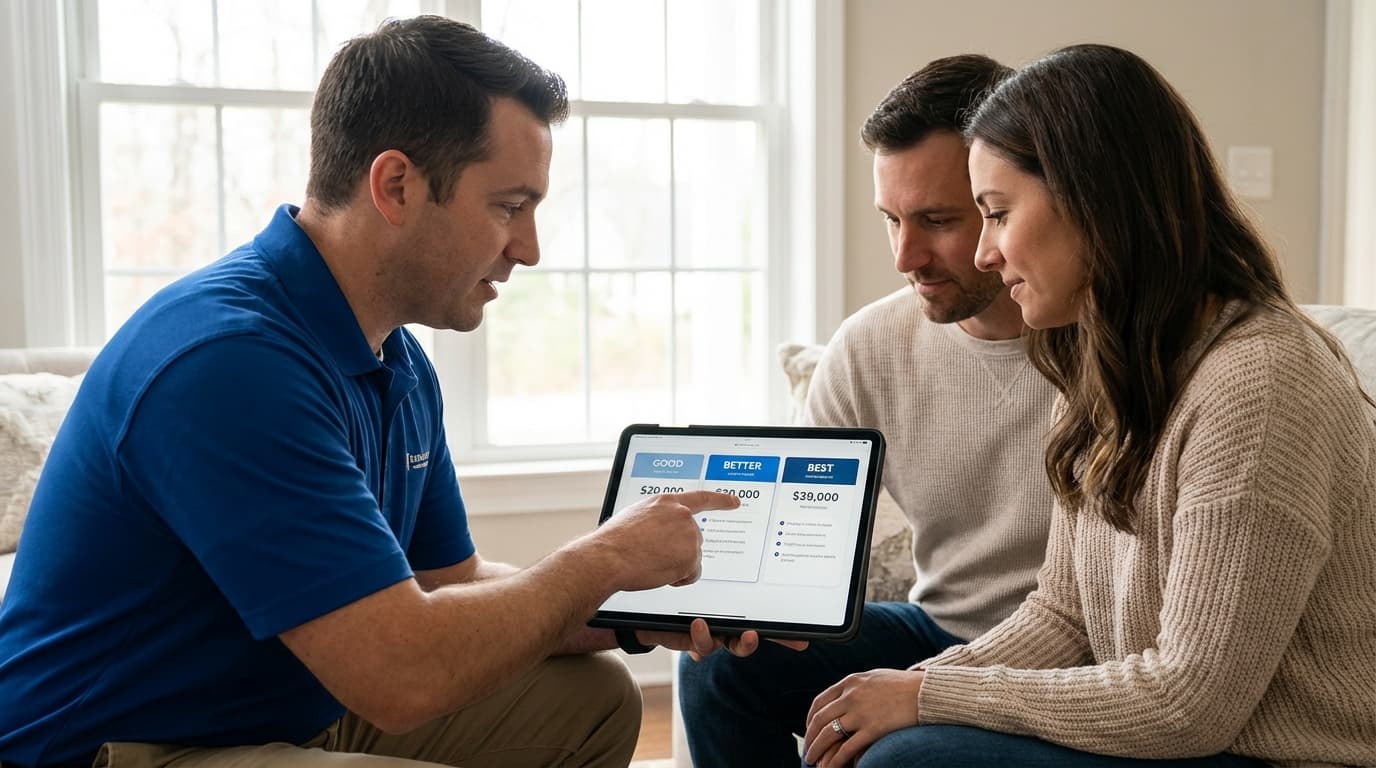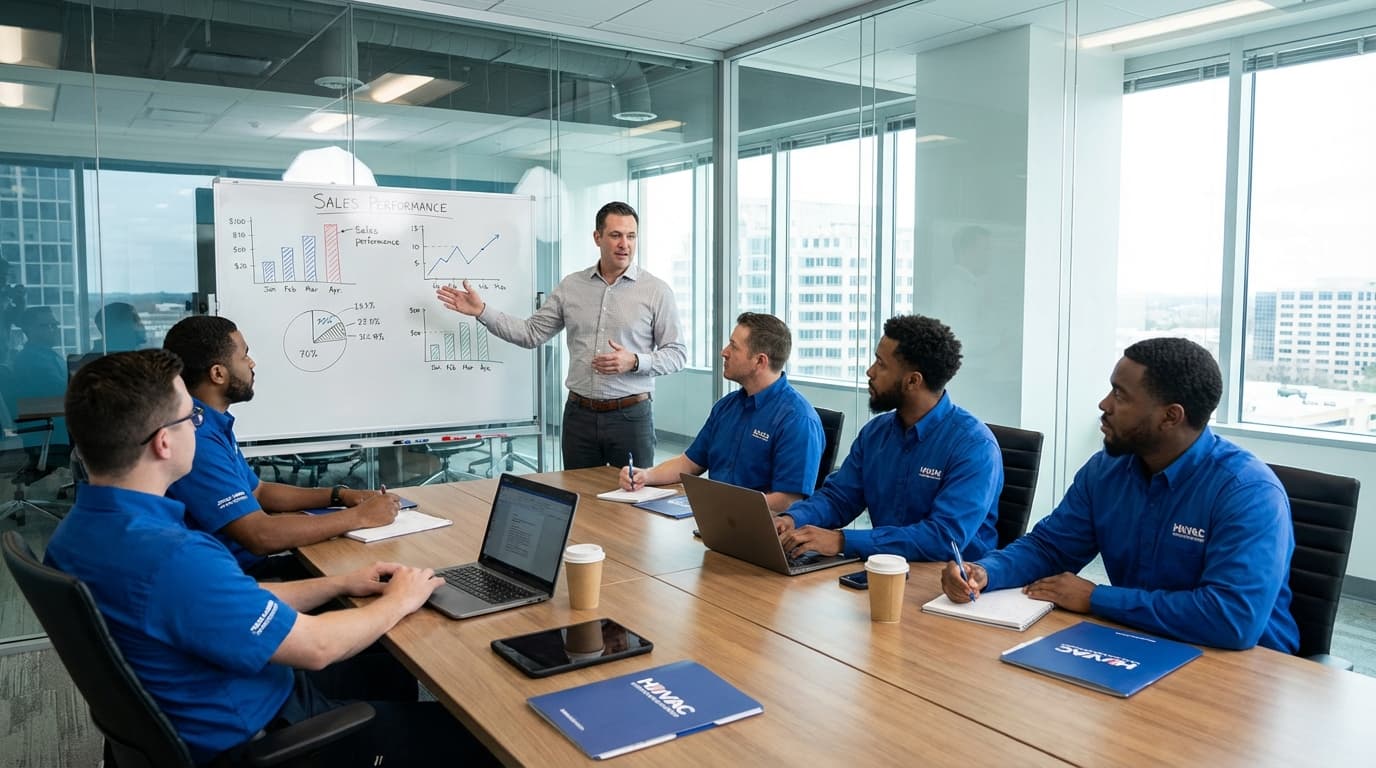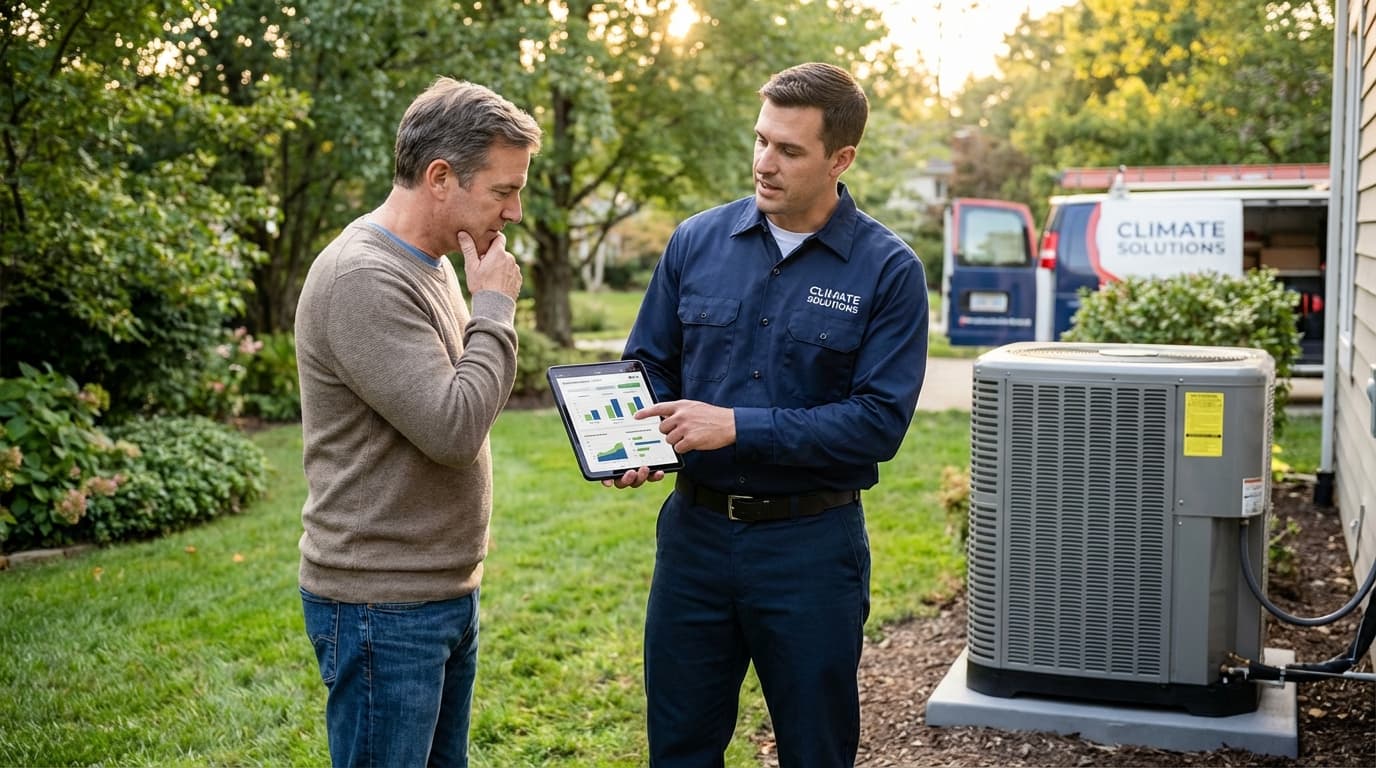
Your top technician closes 45% of service-to-replacement opportunities. Your average tech closes 18%. You've tried training, ride-alongs, and pep talks. Nothing changes the numbers.
Then you launch a simple contest: first tech to hit 10 maintenance agreement sales wins a $500 bonus. Suddenly, everyone's asking about agreement sales on every call. Within two weeks, three techs have hit the target—and overall agreement sales are up 60%.
That's gamification in action—and it works because humans are wired to compete, achieve, and earn recognition.
TL;DR: Sales gamification uses game mechanics (points, leaderboards, rewards, challenges) to motivate performance. For home service teams, well-designed gamification increases close rates 15-30%, boosts agreement sales 40-80%, and improves team morale. The key is designing systems that reward both outcomes and behaviors, include everyone (not just top performers), and don't create toxic competition.
The best sales teams aren't just well-trained—they're motivated. Gamification provides that motivation systematically.
Why Gamification Works for Home Services
Gamification taps into fundamental human psychology.
The Psychology Behind It
What drives motivation:
| Psychological Driver | How Gamification Addresses It |
|---|---|
| Competition | Leaderboards, head-to-head challenges |
| Achievement | Points, badges, levels, milestones |
| Recognition | Public acknowledgment, awards |
| Progress | Visual tracking, advancement |
| Autonomy | Choice in how to earn rewards |
| Mastery | Skill-based challenges, improvement tracking |
Why it works for technicians:
- Field workers are often competitive by nature
- Isolated work means limited peer motivation
- Clear goals focus scattered effort
- Recognition satisfies need for appreciation
- Rewards acknowledge uncompensated effort
Business Impact of Gamification
Typical results from home service gamification:
| Metric | Before | After | Improvement |
|---|---|---|---|
| Close rate | 28% | 36% | +29% |
| Average ticket | $420 | $495 | +18% |
| Agreement sales | 12/month | 22/month | +83% |
| Review requests | 25% compliance | 78% compliance | +212% |
| Team turnover | 35% annual | 22% annual | -37% |
ROI calculation example:
- Investment: $2,000/month (rewards, platform)
- Revenue increase: $18,000/month (from improved metrics)
- ROI: 800%
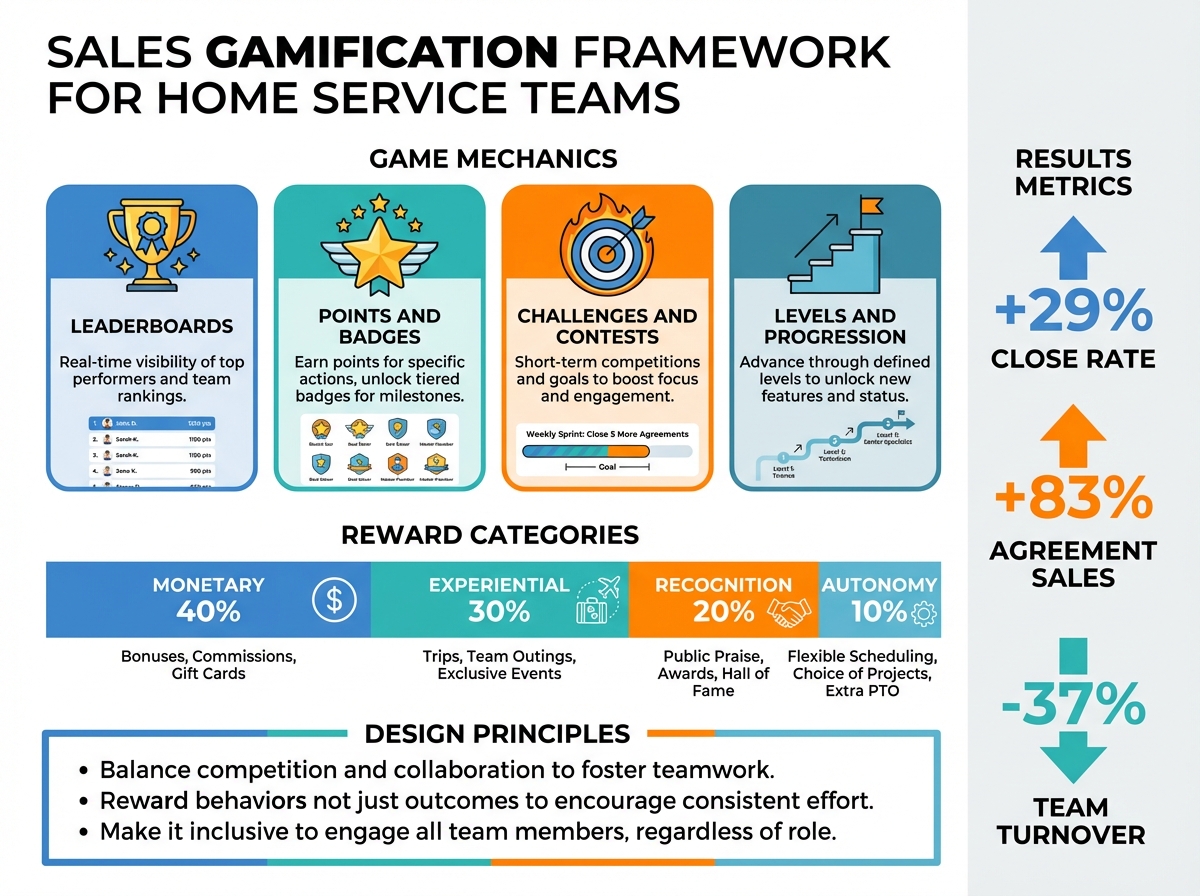
Gamification Elements for Contractors
Different mechanics serve different purposes.
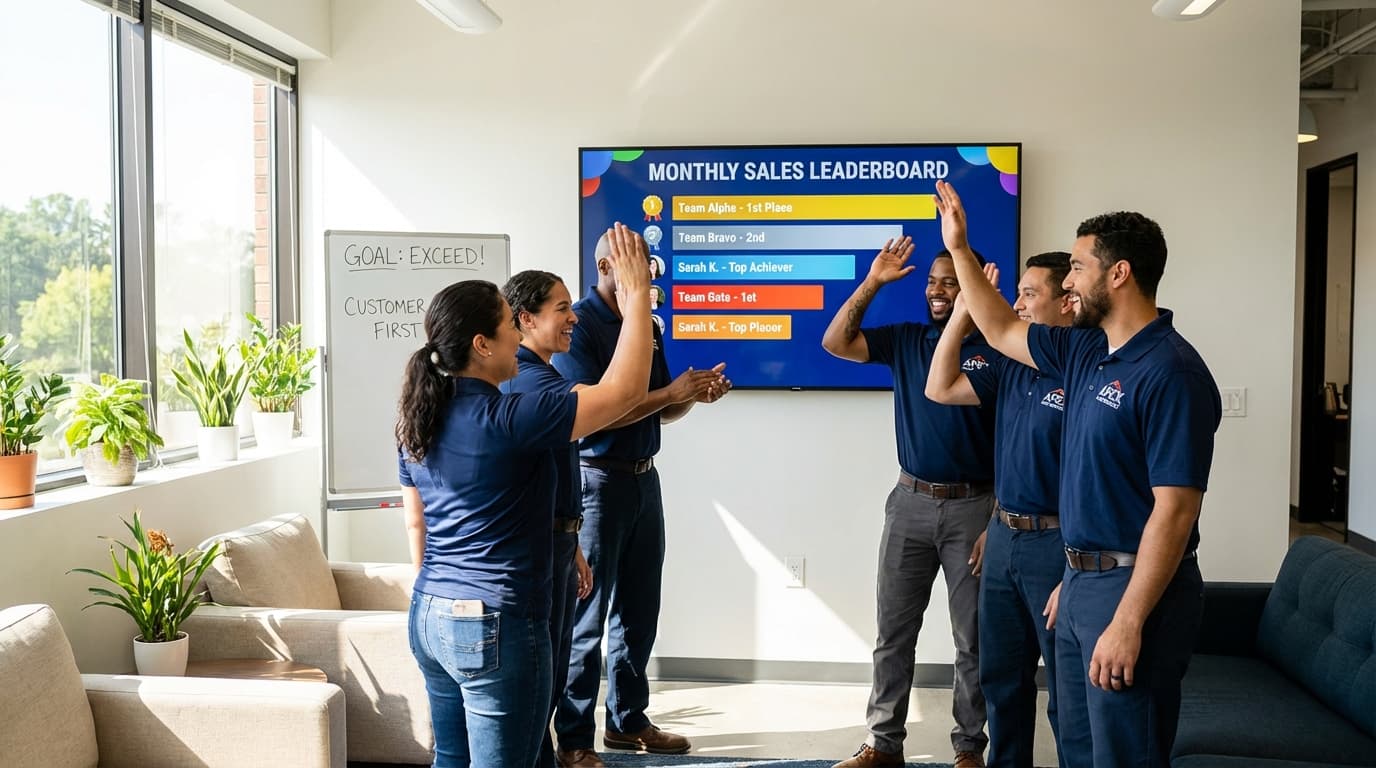
Leaderboards
What they do: Publicly rank performance, create visibility and competition.
Types of leaderboards:
| Type | Best For | Caution |
|---|---|---|
| Overall ranking | Recognizing top performers | Can discourage bottom performers |
| Improvement-based | Motivating growth | More inclusive |
| Team-based | Building collaboration | Reduces individual accountability |
| Weekly reset | Fresh starts, inclusion | Less tracking of long-term performance |
Leaderboard best practices:
- Display prominently (office TV, app, meetings)
- Update in real-time or daily
- Show multiple metrics (not just revenue)
- Consider separate leagues by experience level
- Highlight improvement, not just absolutes
Points and Badges
What they do: Track and recognize specific accomplishments.
Point system example:
| Activity | Points |
|---|---|
| Service call completed | 10 |
| Maintenance agreement sold | 50 |
| 5-star review received | 30 |
| Replacement sold | 100 |
| Referral generated | 75 |
| Perfect attendance (week) | 25 |
Badge examples:
| Badge | Criteria | Recognition |
|---|---|---|
| Agreement Ace | 10 agreements in a month | Expert status |
| Review Rockstar | 20 five-star reviews | Customer favorite |
| First-Call Hero | 95% first-call resolution | Quality focus |
| Closer | 50% close rate for quarter | Sales excellence |
| Team Player | Helps colleagues hit goals | Culture builder |
Challenges and Contests
What they do: Create time-bound competitions with specific goals.
Contest types:
| Contest | Duration | Goal | Reward |
|---|---|---|---|
| Sprint | 1 week | Specific behavior | Small prize |
| Monthly challenge | 1 month | Balanced metrics | Medium prize |
| Quarterly tournament | 3 months | Comprehensive | Large prize |
| Head-to-head | 1 day | Direct competition | Bragging rights |
Contest ideas for home services:
| Contest | Metric | Prize Idea |
|---|---|---|
| Agreement Blitz | Most agreements sold in a week | $500 cash |
| Review Rush | Most reviews generated | New tool set |
| Perfect Week | No callbacks, all on-time | Paid day off |
| Referral Rally | Most referrals in a month | Weekend getaway |
| Close King | Highest close rate | Prime schedule picks |
Levels and Progression
What they do: Create long-term advancement and status.
Example level system:
| Level | Title | Requirements | Perks |
|---|---|---|---|
| 1 | Rookie | New hire | Base pay |
| 2 | Pro | 6 months + training complete | Better leads |
| 3 | Expert | 1 year + performance metrics | Schedule priority |
| 4 | Master | 2 years + top 25% | Premium pay rate |
| 5 | Legend | 3 years + top 10% | Mentor role, bonus |
Designing Your Gamification System
Follow these principles for effective implementation.
Principle 1: Balance Competition and Collaboration
Problem with pure competition:
- Creates toxic environment
- Top performers hoard knowledge
- Bottom performers disengage
- Team culture suffers
Balanced approach:
- Include team-based goals alongside individual
- Reward helping behaviors
- Create "everyone can win" opportunities
- Celebrate collective achievements
Example balanced structure:
- 50% of rewards: Individual performance
- 30% of rewards: Team goal achievement
- 20% of rewards: Improvement and behaviors
Principle 2: Reward Behaviors, Not Just Outcomes
Outcome-only problems:
- Lucky techs win despite poor process
- Good process with bad luck is punished
- Focuses only on what, not how
Behavior metrics to reward:
| Behavior | Why It Matters |
|---|---|
| Presenting three options | Process compliance |
| Asking for reviews | Long-term reputation |
| Following up on leads | Pipeline management |
| Documenting calls | Knowledge preservation |
| On-time arrival | Customer experience |
Principle 3: Make It Inclusive
Avoiding the "same three people always win" problem:
| Tactic | How It Works |
|---|---|
| Multiple categories | Different winners for different strengths |
| Improvement-based awards | Reward growth, not just absolutes |
| Team competitions | Success requires everyone |
| Rotating challenges | Different skills featured |
| Experience tiers | Fair competition within levels |
Principle 4: Keep It Fresh
Gamification fatigue is real:
- Same contest every month gets boring
- Points without purpose lose meaning
- Static leaderboards stop motivating
Keep it fresh:
- Rotate contest types monthly
- Introduce surprise challenges
- Add new badges quarterly
- Refresh rewards annually
- Seasonal themes and variations
Principle 5: Align with Business Goals
Every game element should drive business value:
| Business Goal | Gamification Element |
|---|---|
| Increase agreement sales | Points for agreements, agreement contest |
| Improve close rate | Close rate leaderboard, conversion badges |
| Generate reviews | Review points, review contest |
| Reduce callbacks | Quality badge, callback penalty |
| Improve retention | Team tenure rewards, collaboration points |
Rewards That Work
The right rewards motivate without breaking the bank.
Monetary Rewards
Cash and near-cash:
| Reward | Best For | Budget |
|---|---|---|
| Cash bonus | Major achievements | $100-1,000 |
| Gift cards | Quick wins, flexibility | $25-200 |
| Commission kickers | Ongoing motivation | Variable |
| Profit sharing | Team alignment | Percentage-based |
Monetary reward guidelines:
- Cash is king for most people
- Gift cards work for smaller prizes
- Tie to achievements, not effort alone
- Be consistent and predictable
Experiential Rewards
Experiences often motivate more than equivalent cash:
| Reward | Example | Budget |
|---|---|---|
| Time off | Extra PTO day | $150-300 value |
| Choice | Pick your schedule for a week | $0 direct cost |
| Special access | Lunch with owner/manager | $50-100 |
| Events | Concert tickets, game tickets | $100-500 |
| Travel | Weekend trip | $500-2,000 |
Recognition Rewards
Often undervalued, highly effective:
| Reward | How to Deliver |
|---|---|
| Public praise | Team meeting recognition |
| Company communication | Highlight in newsletter |
| Physical trophy | Rotating "winner" trophy |
| Wall of fame | Photos of achievements |
| Title upgrade | "Senior" or "Lead" designation |
Autonomy Rewards
Letting winners choose:
| Reward | Options |
|---|---|
| Schedule choice | Pick preferred shifts for a month |
| Job selection | First pick on premium jobs |
| Training choice | Pick professional development |
| Equipment upgrade | Choose new tool or equipment |
Implementation Roadmap
Roll out gamification thoughtfully.
Phase 1: Foundation (Week 1-2)
Actions:
- Define business goals for gamification
- Identify metrics to track
- Choose gamification elements to implement
- Select rewards and budget
- Choose tracking method (CRM, dedicated platform, manual)
Key decision: Start simple. One leaderboard, one contest, basic points.
Phase 2: Launch (Week 3-4)
Actions:
- Announce program to team
- Explain rules, metrics, rewards clearly
- Launch initial contest
- Display leaderboard prominently
- Track and update daily
Launch tips:
- Generate excitement—make it an event
- Answer all questions about fairness
- Start with high-achievable early goals
- Celebrate first winners quickly
Phase 3: Iterate (Month 2-3)
Actions:
- Gather feedback from team
- Analyze participation and results
- Adjust rules for fairness
- Add new elements
- Expand metrics tracked
Common adjustments:
- Rebalancing points for difficulty
- Adding team elements if too competitive
- Shortening contest duration for engagement
- Increasing/decreasing reward values
Phase 4: Mature (Month 4+)
Actions:
- Establish regular rhythm
- Rotate contest types
- Introduce advancement/levels
- Connect to compensation structure
- Integrate with company culture
Technology for Gamification
Tools to manage gamification.
CRM-Based Gamification
If your CRM supports it:
- Dashboards show leaderboards
- Automatic point tracking
- Integration with existing data
- Lower cost
Limitations:
- Often basic features
- Limited game mechanics
- May require manual tracking
Dedicated Gamification Platforms
Platforms for home services:
| Platform | Features | Cost |
|---|---|---|
| Ambition | Leaderboards, contests, coaching | $25-50/user/mo |
| LevelEleven | Contests, real-time tracking | $30-60/user/mo |
| Spinify | TV leaderboards, competitions | $15-30/user/mo |
| Hoopla | Real-time dashboards, newsflash | $20-40/user/mo |
DIY/Manual Approach
For smaller teams:
- Spreadsheet tracking
- Whiteboard leaderboard
- Manual point calculation
- Physical prize distribution
Pros: Low cost, simple Cons: Time-consuming, less engaging
Avoiding Gamification Pitfalls
Learn from common mistakes.
Pitfall 1: Creating Toxic Competition
Signs of toxicity:
- Team members sabotaging each other
- Hiding leads or information
- Complaints about unfairness
- Low performers disengaging entirely
Prevention:
- Include collaboration rewards
- Have team-based goals
- Reward behaviors, not just outcomes
- Address unfairness quickly
Pitfall 2: Gaming the System
How people game:
- Cherry-picking easy jobs
- Inflating numbers
- Cutting corners for speed
- Pressuring customers inappropriately
Prevention:
- Multiple balanced metrics
- Quality checks and balances
- Customer satisfaction requirements
- Spot audits of results
Pitfall 3: Reward Inflation
The problem:
- Rewards must increase to maintain motivation
- Budget spirals upward
- Expectations become unrealistic
Prevention:
- Set sustainable reward levels
- Emphasize recognition alongside cash
- Vary reward types
- Reset expectations annually
Pitfall 4: Ignoring Non-Participants
Signs:
- Same people always win
- Large portion of team ignores program
- Program becomes "elite club"
Prevention:
- Multiple winning categories
- Improvement-based awards
- Everyone-participates elements
- Tier-appropriate competition
Pitfall 5: Neglecting the Program
What happens:
- Initial excitement fades
- Updates become inconsistent
- Rules unclear or outdated
- Team loses interest
Prevention:
- Assign program owner
- Regular refresh schedule
- Consistent communication
- Ongoing measurement
Measuring Gamification Success
Track whether gamification is working.
Metrics to Monitor
Business metrics:
| Metric | Track | Compare To |
|---|---|---|
| Close rate | Monthly | Pre-gamification baseline |
| Average ticket | Monthly | Pre-gamification baseline |
| Agreement sales | Monthly | Previous year same month |
| Revenue per tech | Monthly | Pre-gamification |
| Customer satisfaction | Quarterly | Pre-gamification |
Engagement metrics:
| Metric | Track | Target |
|---|---|---|
| Participation rate | Weekly | >80% active |
| Contest completion | Per contest | >50% hit targets |
| Feedback sentiment | Quarterly | Positive trend |
| Voluntary participation | Ongoing | Enthusiastic |
ROI Calculation
Gamification ROI formula:
ROI = (Revenue Increase - Program Cost) / Program Cost × 100
Example:
- Pre-gamification revenue: $150,000/month
- Post-gamification revenue: $172,500/month
- Revenue increase: $22,500/month
- Program cost: $3,000/month (rewards + platform)
- Monthly ROI: ($22,500 - $3,000) / $3,000 = 650%
Frequently Asked Questions
Will gamification create unhealthy competition?
It can if poorly designed. Prevent toxic competition by including team-based goals (30%+ of rewards), rewarding collaboration explicitly, creating multiple ways to win, and addressing unfair situations immediately. Competition should motivate, not stress. If team morale suffers, redesign the program.
What if my team is too small for competition?
Teams under 5 people should focus on goal-based gamification rather than head-to-head competition. Set team targets, individual improvement goals, and milestone achievements. You're competing against the goal, not each other. Personal bests and team records replace leaderboards.
How much should I budget for gamification rewards?
Start with 1-2% of the incremental revenue you expect to generate. If gamification increases revenue $20,000/month, budget $200-400/month for rewards. As you prove ROI, you can increase investment. Mix cash with recognition and experiential rewards to stretch budget further.
Build Your Performance Engine
Gamification transforms sales management from telling people what to do into inspiring people to want to do it. The best programs make achievement visible, progress tangible, and success rewarding.
Key takeaways:
- Gamification increases close rates 15-30% and agreement sales 40-80%
- Balance competition with collaboration to avoid toxicity
- Reward behaviors and improvement, not just outcomes
- Keep programs fresh with rotating contests and challenges
- Measure ROI to justify and optimize investment
Start simple—one leaderboard, one contest, basic tracking. Prove the concept, then expand. The goal isn't a complex game system; it's a motivated team consistently performing at their best.
Ready to track the metrics that power gamification? Start your free trial with TruLine and see real-time performance data for your entire team.