How to Improve Close Rate for Home Service Leads
Here's the thing about paid leads: they're not bad. Your follow-up is.
I talked to a roofing contractor who spent $4,200 on leads last month. He closed 4 jobs. That's a 12% close rate. Same leads, different contractor closed 9 jobs—41%.
The difference? Three simple changes. No extra money. No fancy software at first. Just fixing what was broken in how he handled incoming leads.
You already know how to improve close rate for home service leads matters. Every percentage point is money. A painting contractor closing 30% instead of 20% needs one-third fewer leads to hit the same revenue. That's $800+ saved on marketing every month.
Let's fix your conversion.
Why Your Close Rate Is Stuck at 15%
Most contractors close 10-20% of their leads. You're competing with 3-5 other companies on every quote. Homeowners shop around. You already know this.
What you might not know: the best contractors close 35-50%. Same leads. Same market. Different process.
Before you can improve close rate for home service leads, you need to know your number. Pull last month's data.
Here's how:
- Count qualified leads (people who could actually afford to hire you)
- Count closed jobs
- Divide jobs by leads
- Multiply by 100
That's your baseline. Track it every month.
| Trade | Average Close Rate | Top 10% Close Rate |
|---|---|---|
| HVAC Replacement | 15-25% | 40-55% |
| Plumbing Repair | 25-35% | 50-65% |
| Roofing | 10-20% | 35-50% |
| Painting | 20-30% | 45-60% |
| Electrical | 20-30% | 40-55% |
| Remodeling | 8-15% | 25-40% |
The gap between average and top performers is massive. A roofing company closing 15% needs three times as many leads as one closing 45%. That's triple the ad spend for the same revenue.
Speed Kills (Your Competition)
The fastest way to improve close rate for home service leads is simple: answer faster.
You've heard this before. Here's why it actually matters.
Harvard Business Review studied 2,200 companies. Firms that contacted leads within one hour were seven times more likely to qualify the lead than those who waited 60 minutes longer.
For home services, it's worse. When someone's AC breaks in July, they're calling everyone. First response wins.
The numbers:
- Under 5 minutes: 78% more likely to convert than 30-minute response
- Under 30 minutes: 21x more likely to qualify than 24-hour response
- Same day: bare minimum to compete
- Next day: you lost
An HVAC contractor set up automated texts. They fire within 60 seconds of form submission.
The message: "Got your request for AC repair. I'm calling you from this number in the next 10 minutes. - Mike at Cool Breeze HVAC"
His close rate jumped from 18% to 31% in 90 days. Same leads. Same prices. Just faster response.
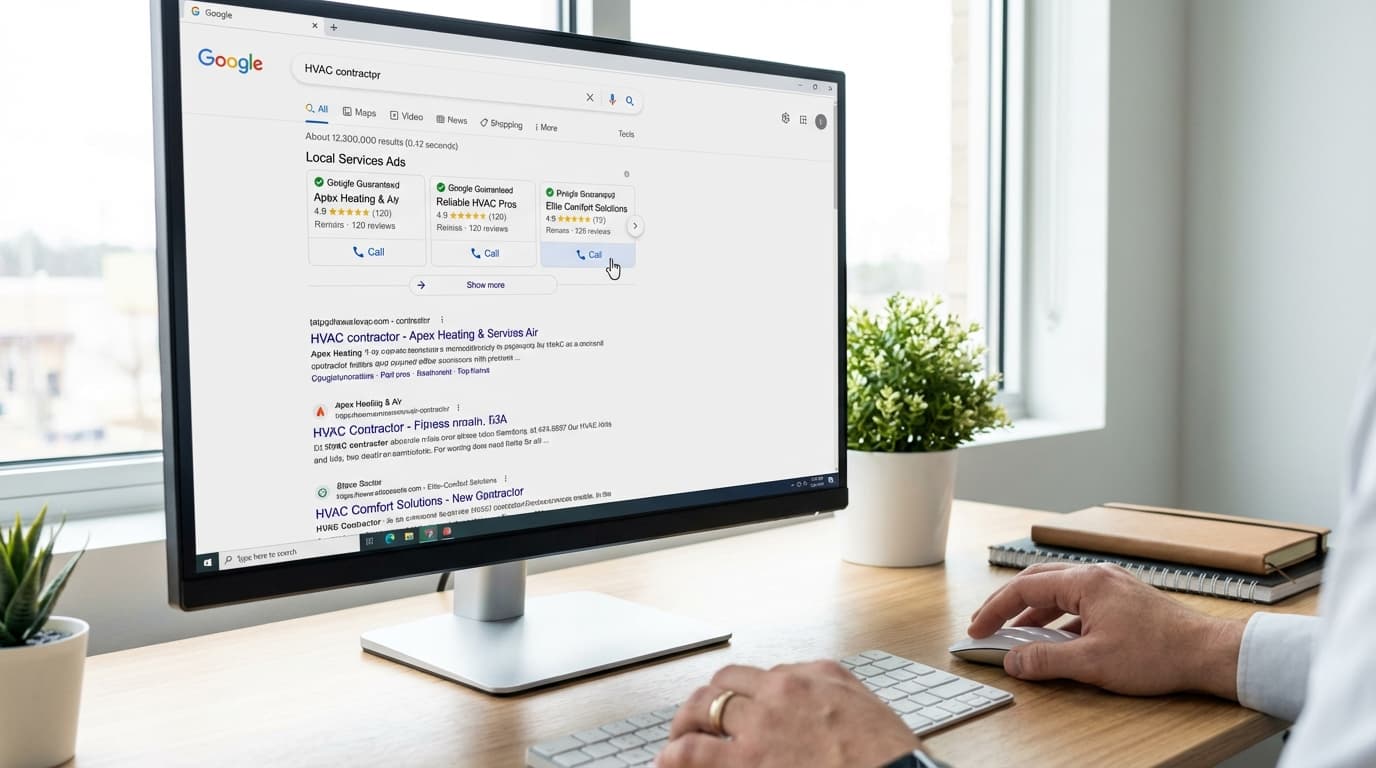
Why it works: homeowners stop shopping when they get instant acknowledgment. They wait for your call instead of calling the next three contractors on Google.
Want to respond to leads faster? Set up text automation. It takes 15 minutes.
Stop Chasing Tire-Kickers
Not all leads are equal. Trying to close everyone wastes time on people who were never buying.
Proper qualification is how you improve close rate for home service leads without needing more leads.
Home service lead qualification happens in the first 90 seconds. Ask three questions:
Can they afford it right now? A homeowner researching future projects is not ready to buy. Someone with a checkbook is.
When do they need it done? Next week is different from next year. Urgency predicts close rate.
Are they the decision-maker? If you're talking to someone who needs to "ask my spouse," you're not closing today.
Top contractors use a point system:
| Question Answer | Points |
|---|---|
| Emergency need | 10 |
| Decision-maker on phone | 8 |
| Budget confirmed | 8 |
| Timeline under 2 weeks | 7 |
| Pre-qualified for financing | 6 |
| Referred by past customer | 5 |
| Owns home | 4 |
| Getting multiple quotes | -3 |
| "Just getting estimates" | -5 |
Leads scoring 15+ get same-day appointments. Under 10 goes into email follow-up. You focus energy on people ready to buy.
A painting contractor in Austin used this system. His close rate went from 22% to 43% in four months. Same leads. He just stopped wasting time on tire-kickers.
You don't need to convince everyone. Find people ready to buy and make it easy to choose you.
The Follow-Up Sequence That Actually Works
Most leads don't buy on first contact. Most contractors give up after one try.
The gap is your opportunity.
Research shows 80% of sales need five follow-up touches. But 44% of salespeople quit after one follow-up.
Your competition is lazy. Good for you.
Here's the sequence that works:
Day 0 (Same Day): Email with project details, timeline, and next steps. Include calendar invite if you set an appointment.
Day 1: Text message asking if they have questions. Keep it conversational. "Hey Sarah, just wanted to check if you had any questions about the estimate I sent yesterday. - Mike"
Day 3: Phone call to address concerns. If no answer, leave a voicemail referencing specific details from your conversation. This shows you remember them.
Day 7: Email with relevant content. Send a case study of a similar project. Share financing options. Mention seasonal promotions.
Day 14: Final text. "Hi Sarah, wanted to check in one last time about your roof replacement. If now isn't the right time, no problem. Just reply STOP if you've gone another direction."
This respects their space while staying top of mind.
An electrical contractor implemented this exact sequence. His close rate jumped from 19% to 34%.
The key: each touchpoint provides value. Not just "checking in." Share a helpful article. Offer seasonal advice. Send a video explaining the project scope.
People buy when they're ready. Your job is to be there when that moment hits.
How to Present Pricing Without Losing on Price
How you present pricing determines whether you close or lose to cheaper competitors.
Being the cheapest does not maximize close rate. Homeowners hire based on trust, perceived value, and convenience as much as price.
Test these pricing strategies:
Good-Better-Best: Offer three tiers. Most customers choose the middle. This anchors your price against your premium option, not competitor pricing.
Value Bundling: Group services together. "Complete HVAC tune-up with air quality assessment and thermostat upgrade" sounds more valuable than itemized line items.
Financing Options: Offering payment plans can improve close rate by 30-40% for projects over $2,000. Many homeowners can afford $200/month but not $4,800 upfront.
A painting contractor switched from itemized estimates to package pricing. His close rate went from 24% to 38% without changing actual prices.
The perception of value increased. The numbers stayed the same.
Use Tech to Stop Dropping Leads
Manual lead tracking kills close rates. By the time you remember to follow up, they hired someone else.
The right tools help you improve close rate for home service leads by making sure nothing falls through cracks.
What you need:
- Lead capture automation (instant notifications when forms submit)
- Mobile CRM (update lead status from job sites)
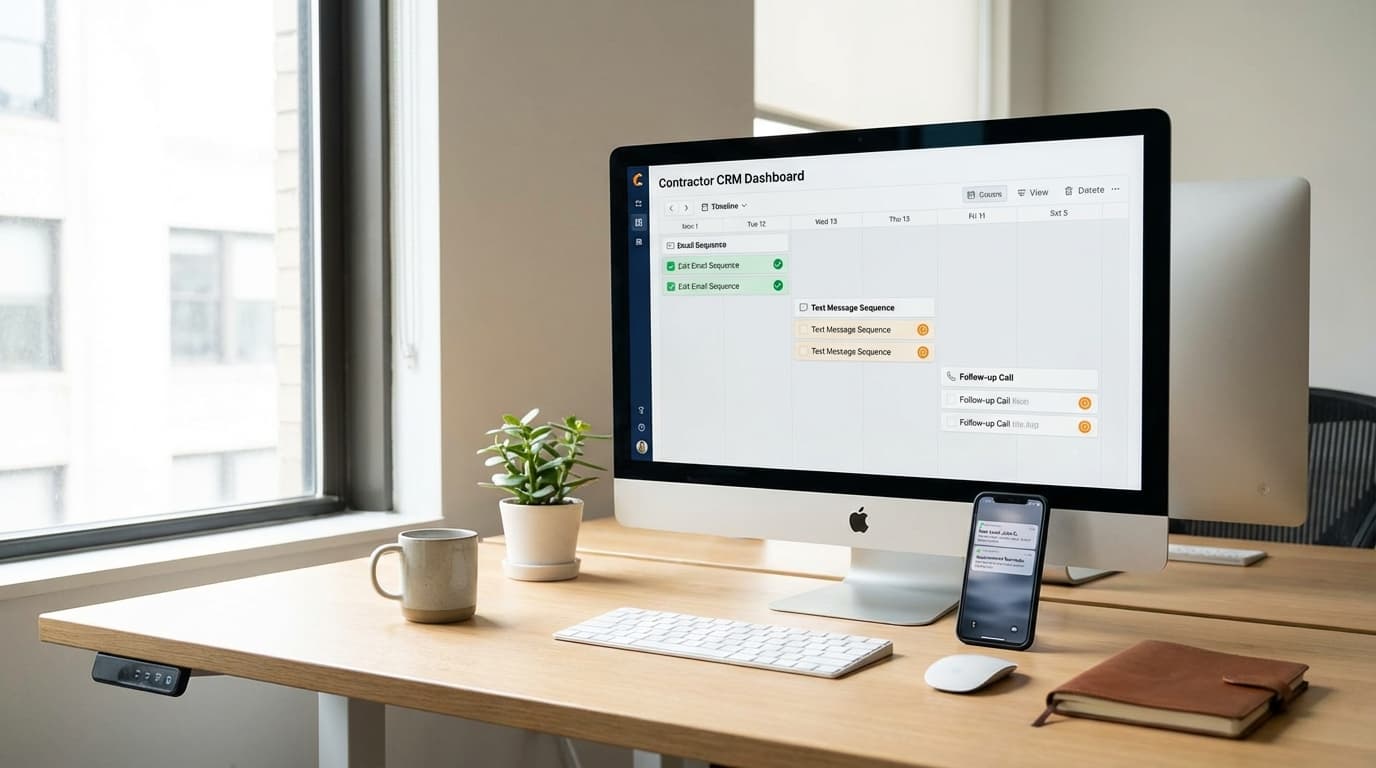
- Automated follow-up (texts and emails that fire based on lead status)
- Call recording (review what works and what doesn't)
- Performance dashboard (see conversion metrics in real-time)
Contractors using lead management software see 27% higher close rates than those using spreadsheets.
The tech doesn't make the sale for you. It ensures you never miss a lead, forget a follow-up, or lose track of opportunities.
Consistency compounds into higher conversion over time.
Handling "Your Price Is Too High"
Every contractor hears the same objections. How you respond determines whether you improve close rate for home service leads or watch opportunities slip away.
Objection: "Your price is too high"
Weak response: "Let me see if I can do better on price."
Strong response: "I appreciate you being straightforward about budget. Let me ask—if price were equal, is there anything else holding you back?"
This uncovers the real objection. Often price is a smokescreen for trust concerns.
Objection: "We need to think about it"
Weak response: "Sure, take your time."
Strong response: "Absolutely, this is important. Just to make sure I gave you everything—what specifically are you thinking about? Timeline, financing, or something about the project scope?"
This gets them talking about real concerns you can address right now.
Objection: "We're getting three more estimates"
Weak response: "Great, call me after."
Strong response: "Smart approach. Most homeowners do the same. What criteria are you using to compare? Just price, or warranty, timeline, and references too?"
This positions you to differentiate on value instead of competing on price alone.
The pattern: never accept objections at face value. Dig deeper with questions to uncover the real concern.
Track What Matters
You can't improve what you don't measure.
Set up tracking for these metrics:
Weekly review:
- Overall close rate (this week vs. last month)
- Close rate by lead source (Google, Facebook, referrals)
- Average time from lead to first contact
- Appointment show rate
- Estimate-to-close conversion
Monthly deep dive:
- Lost deal reasons (categorize and track)
- Win/loss patterns by service type
- Individual team member performance
- Customer feedback and reviews
One HVAC company discovered their referral leads closed at 67% versus 23% for paid ads. They shifted marketing budget to customer referral incentives and improved overall close rate by 19 points while reducing cost per lead.
The data tells you exactly where to focus.
Real Numbers from Real Contractors
Phoenix Roofing Company:
Started at 12% close rate. Three months later: 41%.
Changes:
- Automated 60-second text response
- Qualification script with points
- Three-option pricing
- 14-day follow-up sequence
- Weekly sales training
Result: revenue increased 215% with same marketing budget.
Austin Plumbing Service:
Started at 21% close rate. Six months later: 47%.
Changes:
- Mobile CRM for real-time updates
- Call recording and weekly review
- Good-better-best pricing
- 24-hour appointment confirmations
- Technician incentives tied to conversion
Result: added two trucks without increasing ad spend.
Seattle Painting Contractor:
Started at 18% close rate. Four months later: 39%.
Changes:
- Package pricing instead of itemized
- Visual proposals with photos
- Financing for projects over $3,000
- Referral program with $200 incentives
- Customer testimonial videos
Result: doubled revenue while working fewer hours.
The pattern: systematic process improvement, not random tactics.
Start Here
The easiest way to improve close rate for home service leads is to fix your biggest leak first.
If you're not responding within 15 minutes, fix that before anything else.
If response time is solid but you're not qualifying properly, add the point system.
If you're qualifying but not following up past day three, build the sequence.
Track your baseline this month. Implement one change. Measure next month. Repeat.
That 41% close rate isn't theory. It's achievable with focused execution.
Your competitors are still winging it at 15-20% conversion. Your systematic approach creates a massive advantage.
Ready to stop losing leads to slower competitors? TruLine's lead management platform helps contractors respond faster, qualify better, and follow up automatically. See how we helped 500+ contractors improve close rates by an average of 18 percentage points.
Start your free trial and close more jobs this month.